 |
전자부품 데이터시트 검색엔진 |
|
|
전자부품 데이터시트 검색엔진 |
|
The question interval is too short.
Please try again in a few seconds.

Hello, Please ask a question about P4C147-10DM Datasheet
# Example questions:
➢ What are some of the recurring themes or keywords that appear frequently?
➢ Analyze the formatting and structure of the text. what observations can you make about its organization and presentation?
➢ Considering the variety of symbols, abbreviations, and potentially non-standard characters, what might be the purpose or intended audience of this document?
| Part No. | P4C147-10DM |
| Manufacturer | ETC |
| Size | 59 Kbytes |
| Pages | 6 pages |
| Description | ULTRA HIGH SPEED 4K x 1 STATIC CMOS RAM |



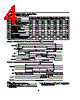


This is a complex and fascinating collection of text! It appears to be a hybrid of different types of content:
Overall Impression: The text combines elements of:
️· Encoding/Encryption/Cipher: There are numerous unfamiliar abbreviations, symbols, and seemingly random characters. This suggests a deliberate attempt to obscure the meaning, hinting at a code or cipher. The layout suggests there is an intention for different codes to be used.
️· Vocabulary and Grammar Mixture: It utilizes a mix of what appears to be a custom vocabulary, with borrowed words and phrases from several languages (likely including German, French, and some likely influenced by Latin and perhaps Slavic). Grammar is unusual, and sentences often lack typical structure.
️· Structured Data: The use of tables, lists, and columnar arrangement strongly suggests an attempt to organize information, despite the cryptic nature of the content. The formatting is a form of hidden information.
️· Likely a Key-Based System: The seemingly arbitrary character choices and combinations, along with the structured layout, point to a key-based system where the apparent nonsense has specific meanings when decoded with the correct key or codebook.
Breakdown of Specific Sections and Elements:
️· "ÎÛÝÑÓÓÛÒÜÛÜ ÑÐÛÎßÌ×ÒÙ" (Summary Title): Suggests an overview or summary section. The text following this heading is also highly cryptic.
️· Tables: The tables with "ͧ³¾±´", "п®¿³»¬»®" (likely key-related header labels), "Ì»³°»®¿¬«®»", and "˲·¬" strongly indicate a cipher or encoded system. The data within these tables would likely be the actual encrypted information.
️· "ÝßÐßÝ×ÌßÒÝÛÍ" and "ÝÑÒÜ×Ì×ÑÒÍ": Titles of Sections - Again implying that the different encodings are specific to certain sections.
️· The numerous abbreviations and "codes" are likely placeholders within the key. The specific combinations used matter within the decoding system.
Possible Interpretations & What It Might Be:
1. Military/Espionage Code: The most likely scenario is that this is part of a complex code used for secret communication during wartime or other clandestine operations.
2. Esoteric/Secret Society Language: It's possible this is a language or code used by a secret society or group to communicate among its members.
3. Advanced Computer Algorithm or Data Encoding: In a modern context, it *could* be a form of data encoding used in a computer algorithm or programming language that is deliberately obfuscated to make it difficult to understand.
4. Complex Literary Device: As a less probable scenario, this could be an elaborate literary device used by an author to create a puzzle or mystery within their work.
To Decipher It:
1. Identify Language Influences: If possible, determine the base languages used to create the vocabulary.
2. Look for Patterns: Analyze the frequency of characters, word lengths, and positional relationships.
3. Find Possible Keys: Attempt to identify potential keys that could be used to decode the messages. The key would likely have a system.
Without the Key (or a solid understanding of the system used to create the content), decryption is practically impossible. It’s a truly remarkable and intriguing piece of content!
This is a complex and fascinating collection of text! It appears to be a hybrid of different types of content:
Overall Impression: The text combines elements of:
️· Encoding/Encryption/Cipher: There are numerous unfamiliar abbreviations, symbols, and seemingly random characters. This suggests a deliberate attempt to obscure the meaning, hinting at a code or cipher. The layout suggests there is an intention for different codes to be used.
️· Vocabulary and Grammar Mixture: It utilizes a mix of what appears to be a custom vocabulary, with borrowed words and phrases from several languages (likely including German, French, and some likely influenced by Latin and perhaps Slavic). Grammar is unusual, and sentences often lack typical structure.
️· Structured Data: The use of tables, lists, and columnar arrangement strongly suggests an attempt to organize information, despite the cryptic nature of the content. The formatting is a form of hidden information.
️· Likely a Key-Based System: The seemingly arbitrary character choices and combinations, along with the structured layout, point to a key-based system where the apparent nonsense has specific meanings when decoded with the correct key or codebook.
Breakdown of Specific Sections and Elements:
️· "ÎÛÝÑÓÓÛÒÜÛÜ ÑÐÛÎßÌ×ÒÙ" (Summary Title): Suggests an overview or summary section. The text following this heading is also highly cryptic.
️· Tables: The tables with "ͧ³¾±´", "п®¿³»¬»®" (likely key-related header labels), "Ì»³°»®¿¬«®»", and "˲·¬" strongly indicate a cipher or encoded system. The data within these tables would likely be the actual encrypted information.
️· "ÝßÐßÝ×ÌßÒÝÛÍ" and "ÝÑÒÜ×Ì×ÑÒÍ": Titles of Sections - Again implying that the different encodings are specific to certain sections.
️· The numerous abbreviations and "codes" are likely placeholders within the key. The specific combinations used matter within the decoding system.
Possible Interpretations & What It Might Be:
1. Military/Espionage Code: The most likely scenario is that this is part of a complex code used for secret communication during wartime or other clandestine operations.
2. Esoteric/Secret Society Language: It's possible this is a language or code used by a secret society or group to communicate among its members.
3. Advanced Computer Algorithm or Data Encoding: In a modern context, it *could* be a form of data encoding used in a computer algorithm or programming language that is deliberately obfuscated to make it difficult to understand.
4. Complex Literary Device: As a less probable scenario, this could be an elaborate literary device used by an author to create a puzzle or mystery within their work.
To Decipher It:
1. Identify Language Influences: If possible, determine the base languages used to create the vocabulary.
2. Look for Patterns: Analyze the frequency of characters, word lengths, and positional relationships.
3. Find Possible Keys: Attempt to identify potential keys that could be used to decode the messages. The key would likely have a system.
Without the Key (or a solid understanding of the system used to create the content), decryption is practically impossible. It’s a truly remarkable and intriguing piece of content!
| Part No. | P4C147-10DM |
| Manufacturer | ETC |
| Size | 59 Kbytes |
| Pages | 6 pages |
| Description | ULTRA HIGH SPEED 4K x 1 STATIC CMOS RAM |
| ALLDATASHEET 가 귀하에 도움이 되셨나요? [ DONATE ] |
Alldatasheet는? | 광고문의 | 운영자에게 연락하기 | 개인정보취급방침 | 링크 투 데이터시트 | 링크교환 | 제조사별 검색 All Rights Reserved©Alldatasheet.com |
| Russian : Alldatasheetru.com | Korean : Alldatasheet.co.kr | Spanish : Alldatasheet.es | French : Alldatasheet.fr | Italian : Alldatasheetit.com Portuguese : Alldatasheetpt.com | Polish : Alldatasheet.pl | Vietnamese : Alldatasheet.vn Indian : Alldatasheet.in | Mexican : Alldatasheet.com.mx | British : Alldatasheet.co.uk | New Zealand : Alldatasheet.co.nz |
|
Family Site : ic2ic.com |
icmetro.com |
 Korean ▼
  English
 Chinese
 German
 Japanese
 Russian
 Spanish
 French
 Italian
 Portuguese
 Polish
 Vietnamese
 Indian
 Mexican
 British
 New Zealand